Precision: The Cardinal Requirement of Watchmaking
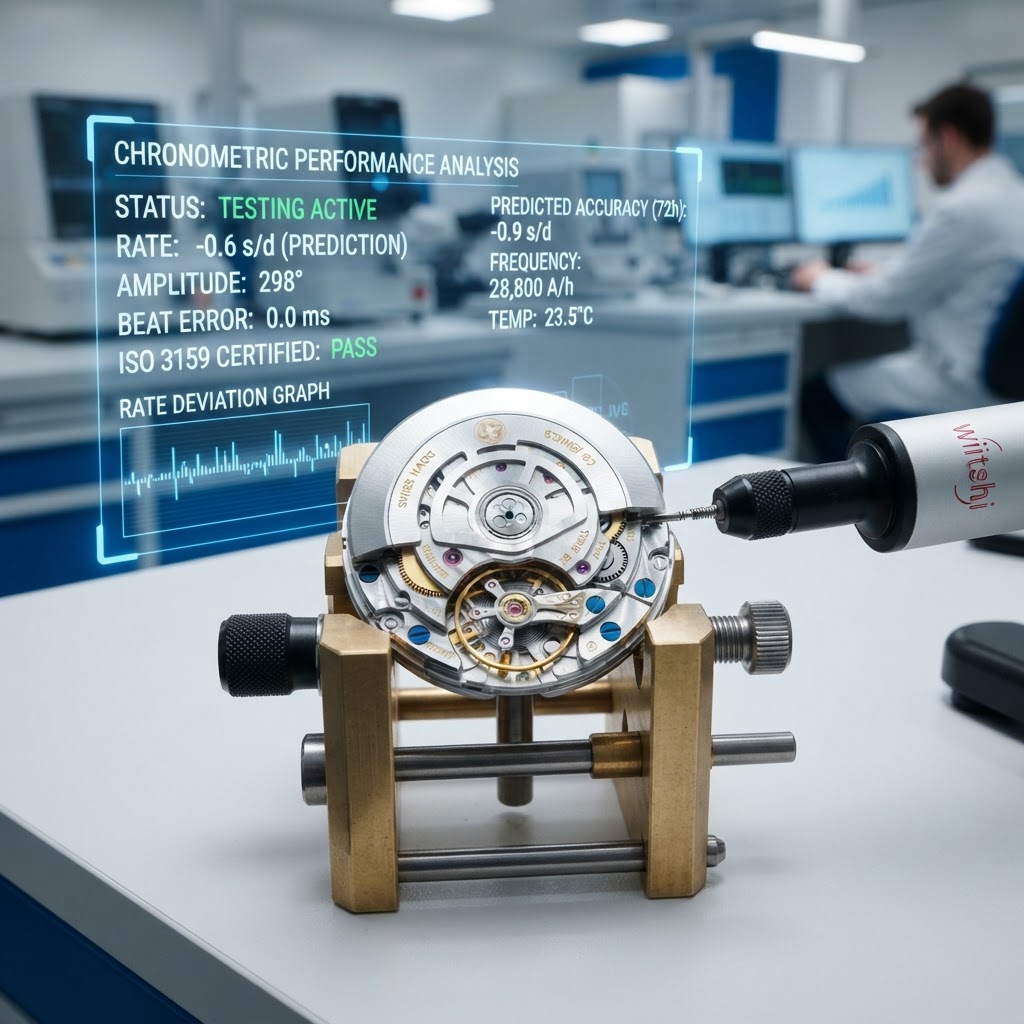
Chronometric precision is the very identity of a Swiss watch. Whether COSC certification, Master Chronometer, or house requirements, tolerances are measured in seconds per day. However, this precision depends on a complex chain of parameters—balance wheel machining, isochronism adjustment, lubrication, assembly, magnetism, and position—the interaction of which is difficult to master.
Traditionally, precision is only verified at the final inspection stage on the assembled watch. If a piece fails the test, it must be disassembled, corrected, and reassembled—a costly cycle. Predictive AI changes the game.
Anticipating Precision from Manufacturing
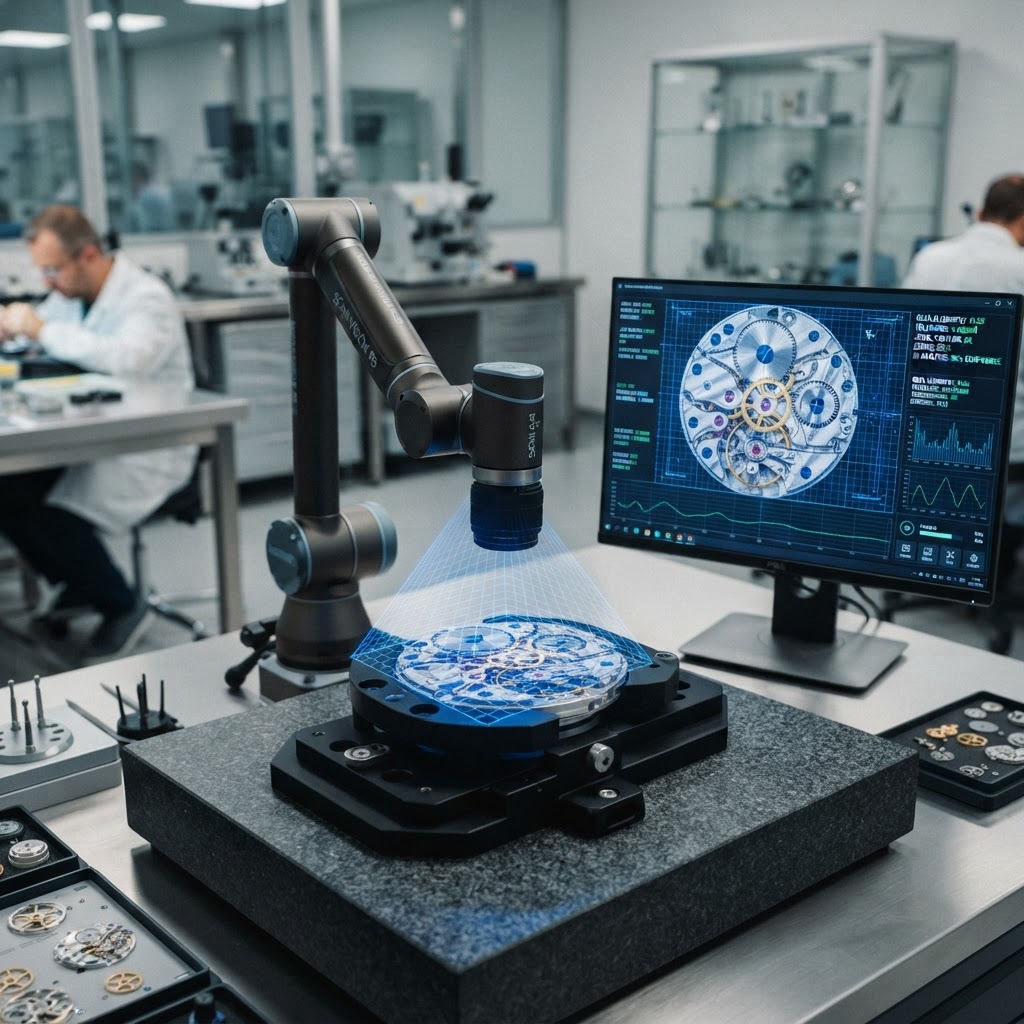
By leveraging data collected at every stage—machined dimensions, assembly parameters, intermediate test results, and environmental data—AI builds a predictive model for final chronometric precision. Even before the watch is assembled, the system estimates its likely performance and identifies high-risk parts.
- Prediction of chronometric behavior in different positions (6 positions, 2 temperatures).
- Detection of parts at risk of insufficient isochronism or amplitude.
- Recommendation of corrective adjustments before final assembly.
- Reduction in disassembly/reassembly cycles linked to final inspection failures.
Stabilizing Quality Across Series
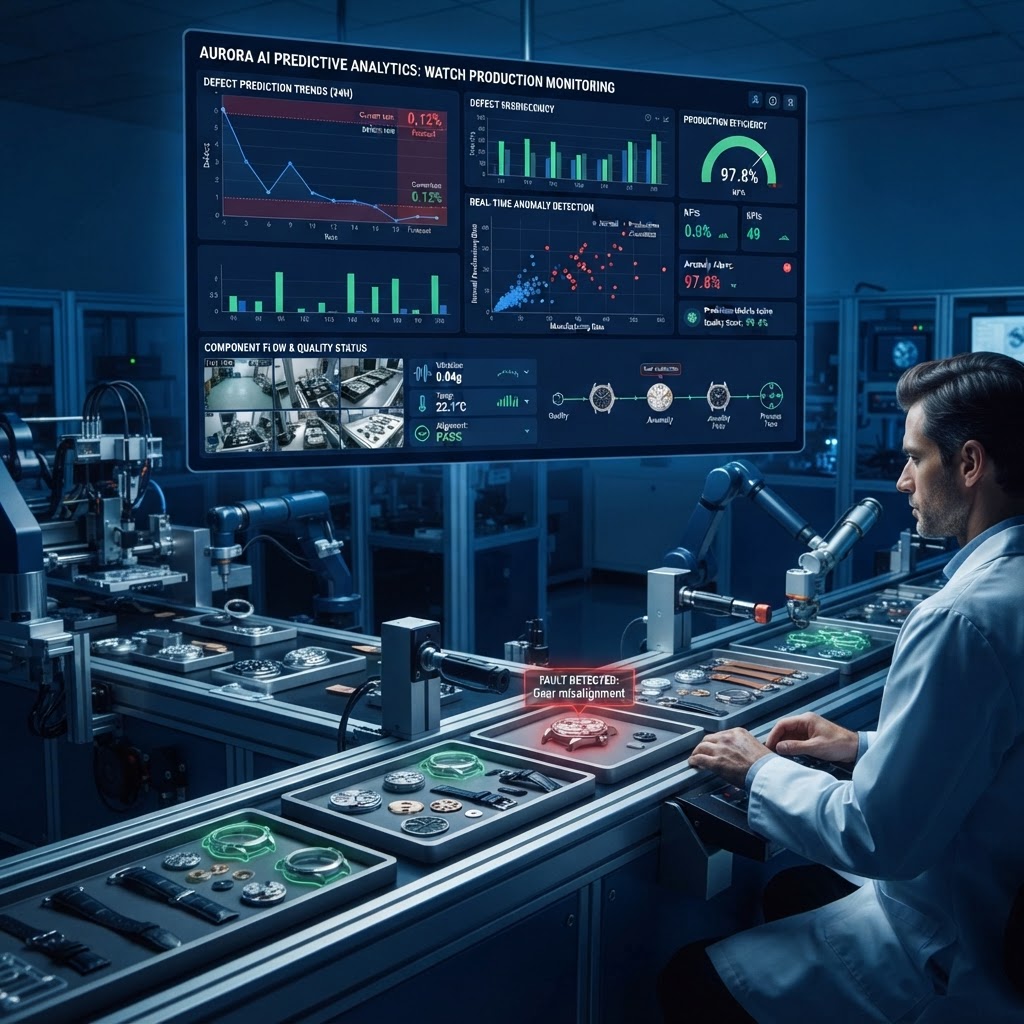
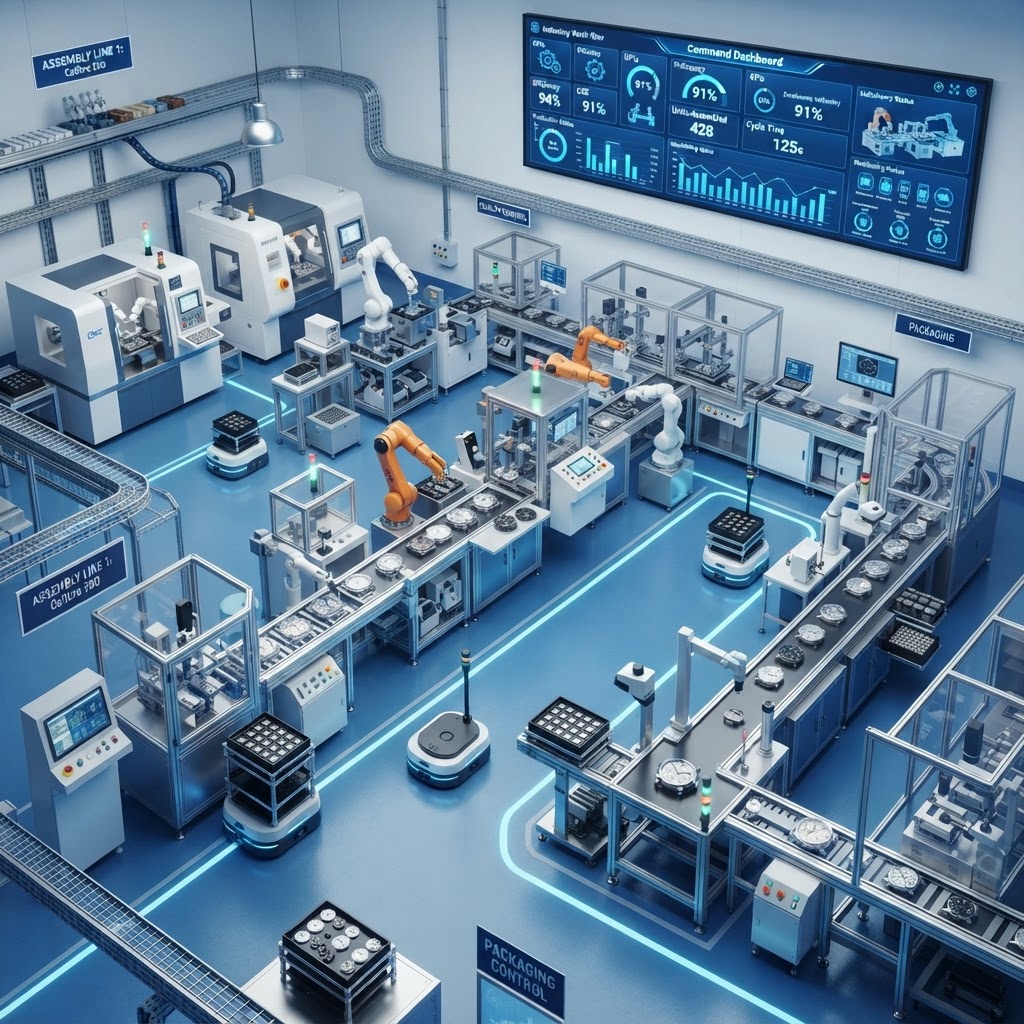
Beyond piece-by-piece prediction, AI analyzes trends across entire production runs. It identifies which batches of components, assembly stations, or machining parameters generate recurring precision drifts. Engineers can then correct structural causes rather than just treating symptoms.
Measurable Benefits
- Reduction in the rework rate at final inspection.
- Increased stability of average precision from one series to the next.
- Rapid identification of at-risk component batches.
- Optimization of assembly parameters through continuous learning.
- Complete traceability: every measurement is linked to its production context.
Towards Augmented Watchmaking
Predictive AI does not replace the watchmaker; it provides a finer, earlier view and frees their expertise for high-value-added adjustments. It is the alliance of human craftsmanship and algorithmic intelligence that advances the precision of a new generation of watches.