Accounting entry: a drain on resources dried up by AI
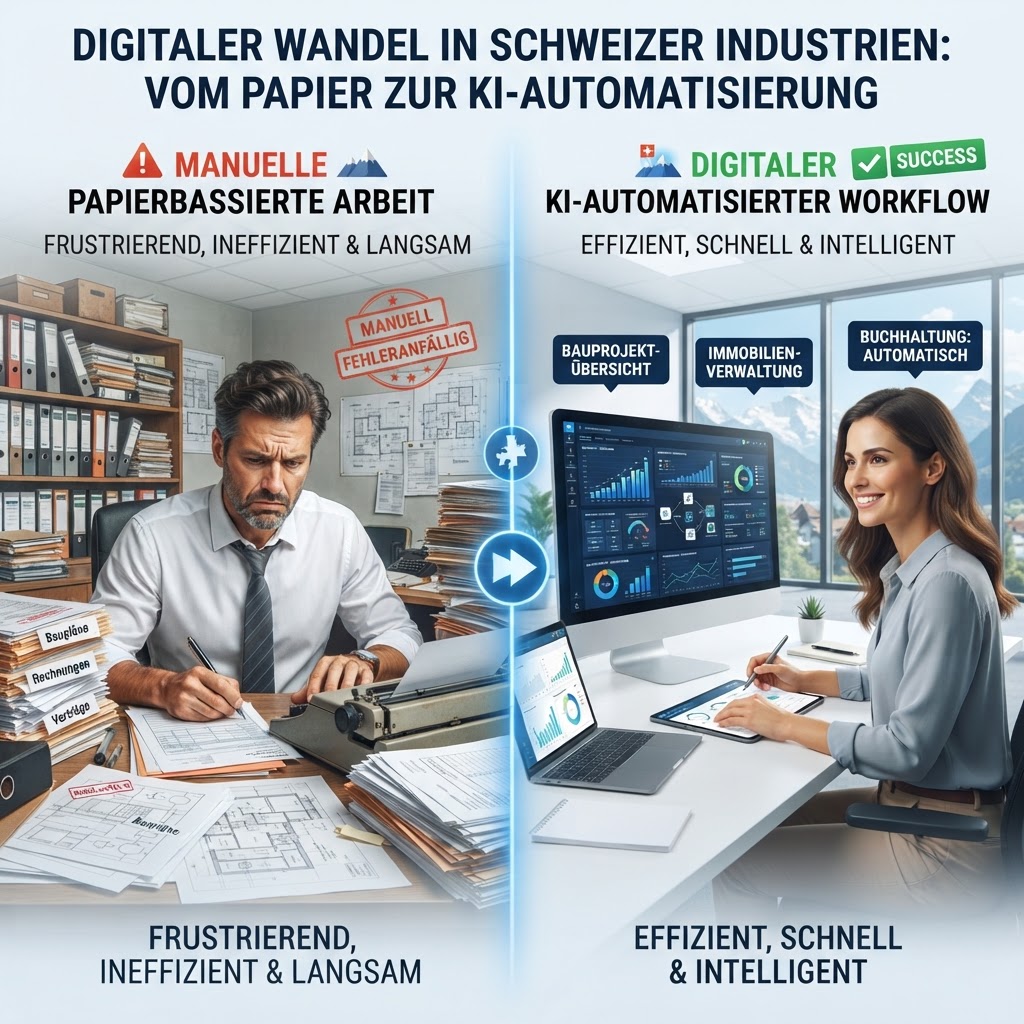
In an average Swiss SME, accounting entry represents 8 to 15 hours per week for an accountant. It is also a source of errors (incorrect VAT allocation, wrong totals, duplicates) and delays that penalize cash flow.
Autonomous AI radically changes the landscape: it does not just read an invoice, it understands, books, reconciles, audits, and proposes—leaving the accountant to validate and advise.
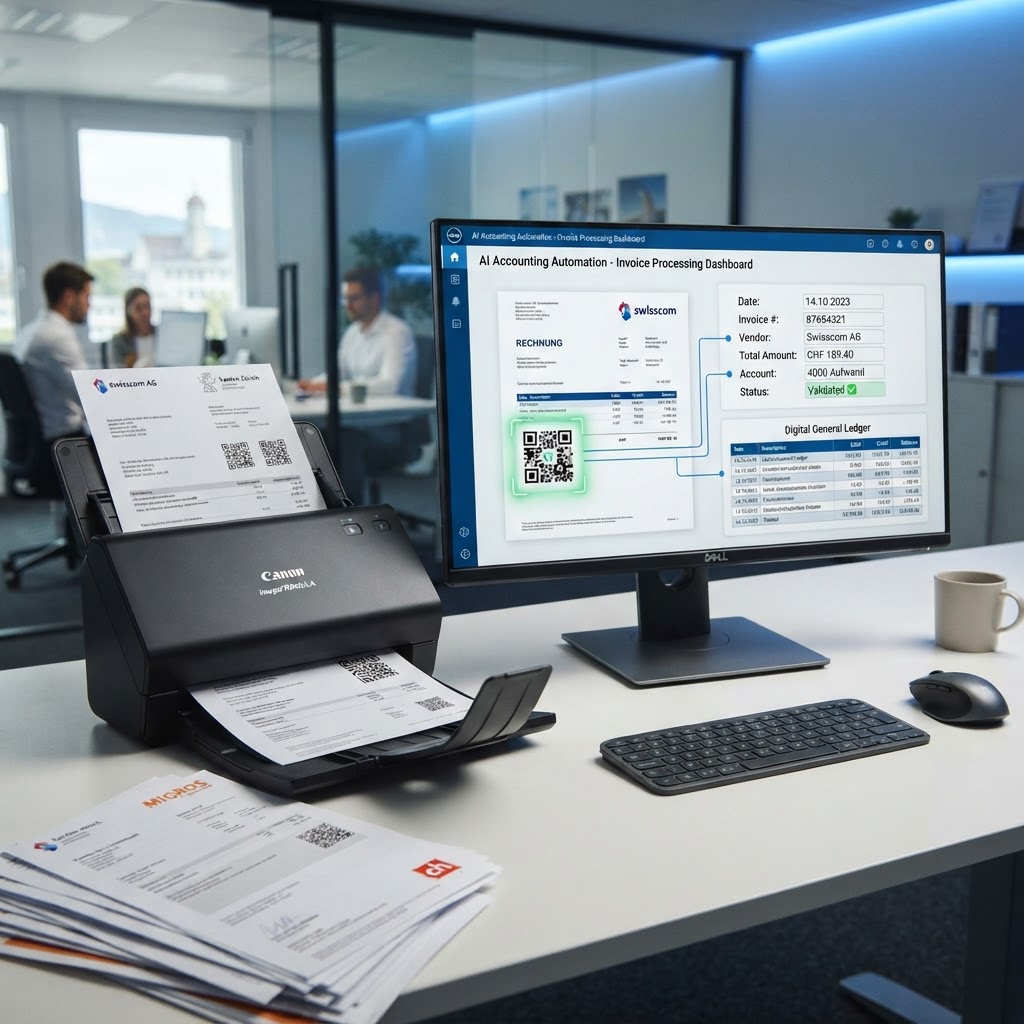
The 5 steps that AI automates
- AI Extraction: OCR, vision, and LLMs read the invoice (supplier, dates, amounts, VAT, IBAN, Swiss QR-bill).
- Accounting allocation: The AI proposes the appropriate account from the Swiss SME chart of accounts and handles analytical distribution.
- Automatic reconciliation: 95% of payments matched without human intervention.
- Anomaly detection: Continuously flagging duplicates, VAT discrepancies, unusual amounts, and unknown suppliers.
- Proposed and pre-validated entries: The accountant checks in 5 seconds and confirms.
The accountant does not disappear, they gain value
The goal is not to replace the accountant, but to liberate them from non-value-added tasks so they can focus on what matters: advising management, tax optimization, margin analysis, compliance, and managing bank and supplier relationships.
The profile evolves: from 'data entry clerk' to 'controller and advisor.' It is a more rewarding and sustainable career path.
Designed for Switzerland
Invoice Extractor natively integrates the Swiss QR-bill, the Swiss SME chart of accounts, Swiss VAT codes (8.1%, 2.6%, 3.8%), and nLPD compliance. Data is hosted in Switzerland, and the solution operates in multi-company environments with strict row-level security (RLS).
Results observed by our clients
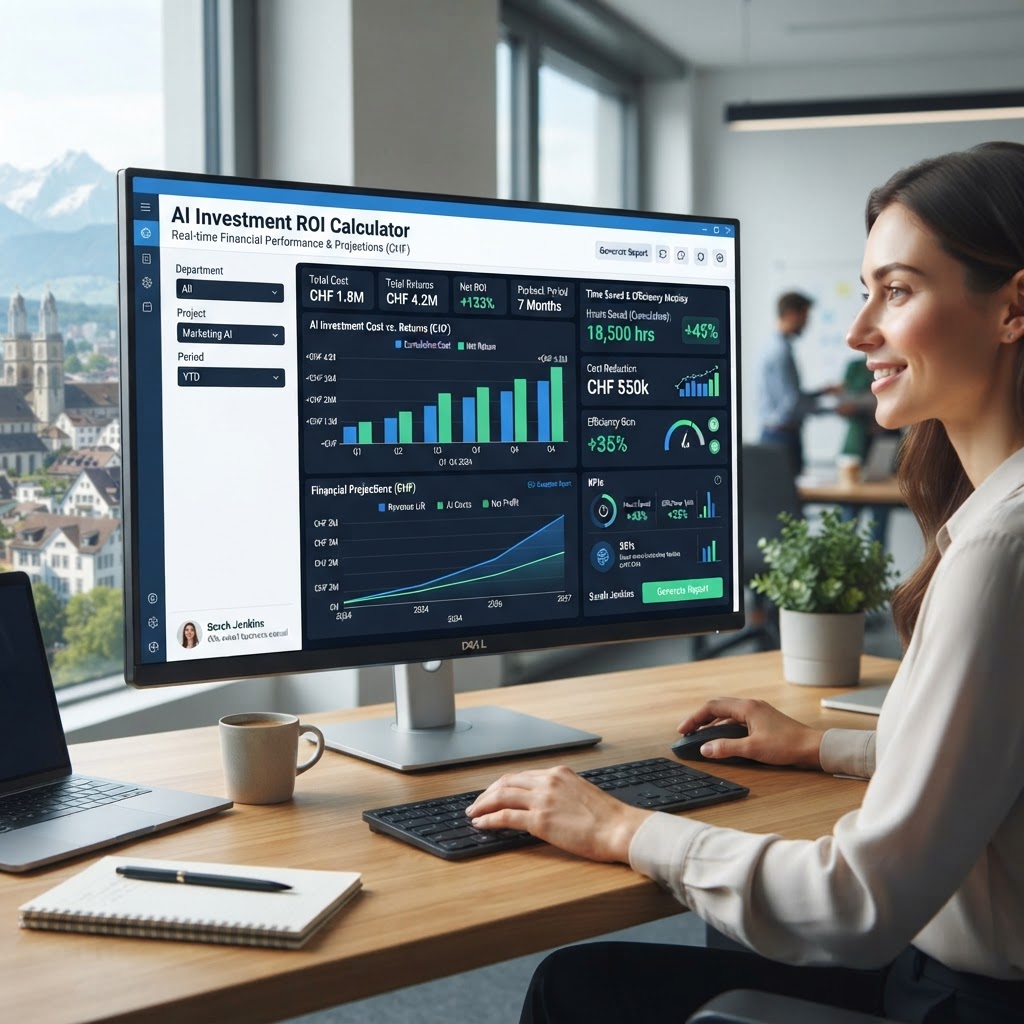
- 95% time saved on data entry
- 80% reduction in VAT errors
- 95% of payments automatically reconciled
- Average ROI in 3 to 4 months
- Accountants refocused on consulting and analysis